By Lionel Kubwimana
••4 min
Proverbs are cultural capsules. Learn how to use them to pass wisdom and language to your children, even when grandparents are far away.
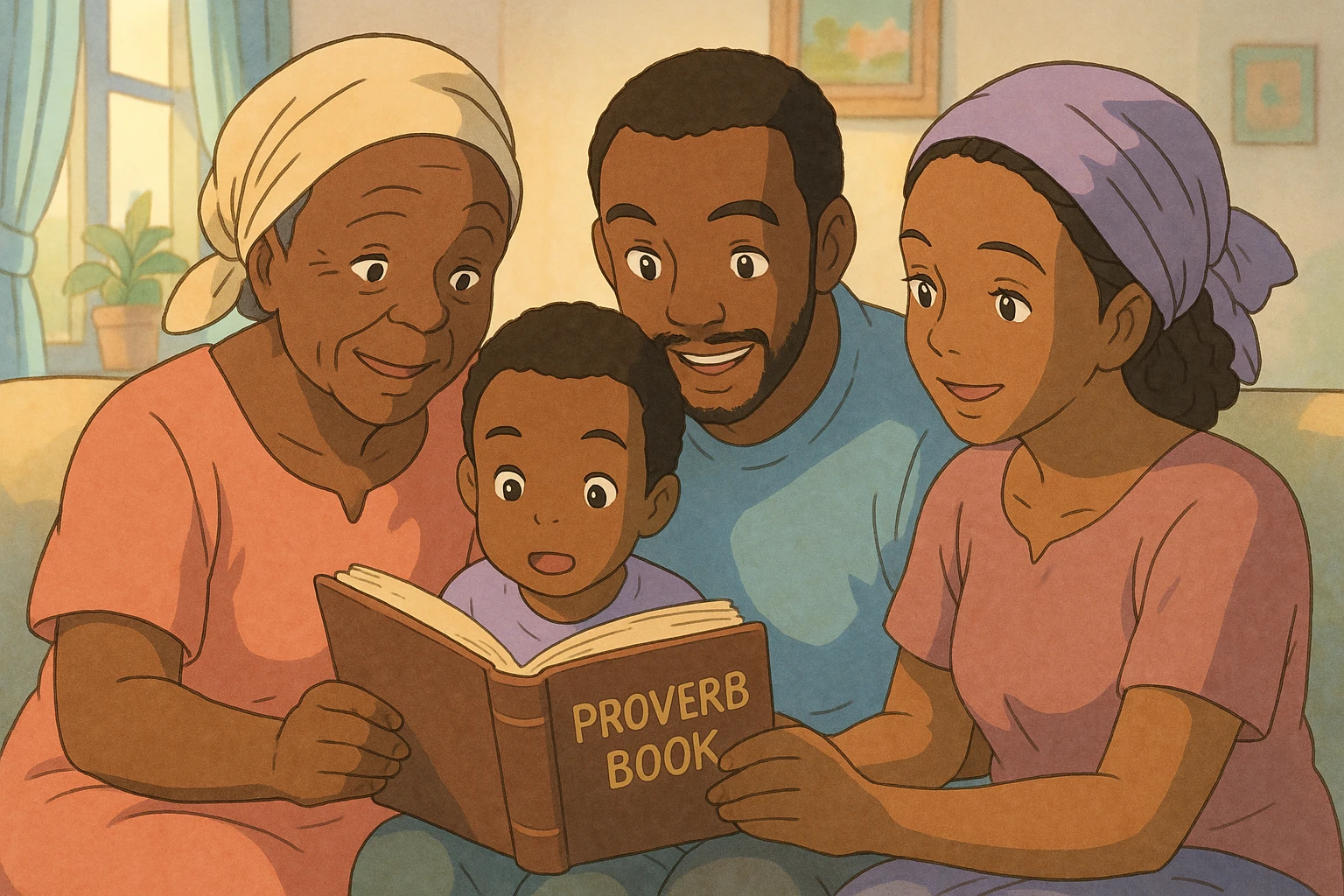
My grandmother's proverbs have stayed with me longer than any language lesson. They're the cultural glue that holds generations together, even across continents. Proverbs are cultural capsules—easy to remember, rich in meaning, and perfect for bridging the distance between grandparents and grandchildren.
Proverbs distill wisdom into bite‑sized phrases that stick. Unlike grammar rules or vocabulary lists, a proverb comes wrapped in a story—or at least the ghost of one. When my grandmother said, “A tree is known by its fruit,” she wasn’t just commenting on gardening. She was teaching me about character, about how actions reveal who we are. That one line carried more cultural weight than a dozen textbooks.
For diaspora families, proverbs are especially valuable. They travel light. You can drop one into a video call, scribble it on a sticky note, or whisper it at bedtime. They don’t require fluency; even a child who only understands half the words will catch the feeling behind them. Proverbs create a shared code—a way of thinking that connects your child to a lineage of ancestors they may never meet in person.
Start by asking your own parents or grandparents which proverbs they grew up with. Record the conversation if you can—not just the words, but the tone and the pauses. Those nuances are part of the teaching. If you’re already far from home, reach out via a messaging app with a simple prompt: “What’s a proverb you’d want your grandchildren to remember?”
Once you have a few, turn them into visual anchors. Draw a picture together that illustrates the proverb. Write it on a card and stick it on the fridge. Use it as a screensaver. The goal is to make the proverb visible, tangible, and part of your everyday environment.
When you share a proverb, don’t just translate it. Tell the story behind it. Why did your grandmother use it? What was happening that day? Context turns a phrase into a memory. If you don’t know the story, invent one together—the act of creation itself becomes a bonding ritual.
The real magic happens when proverbs stop being “lessons” and start being conversation starters. At dinner, ask: “Which proverb would describe today?” On a walk, point to something—a tree, a bird, a puddle—and ask which proverb fits. Let your child invent their own proverb for a situation.
Over time, these phrases become a family shorthand. “Remember the one about the tree?” can stand in for a longer conversation about honesty or patience. When your child faces a challenge, you can offer the proverb like a tool, not a lecture.
Distance melts when you build a shared language. A proverb whispered over a video call can feel as close as one whispered in the same room. It’s physics—a small, dense package of meaning that bridges the miles.
Make a “proverb jar” where you drop new discoveries. Once a month, pull one out and talk about it. When grandparents visit (in person or via screen), invite them to explain a proverb they love. Record those moments. Let your child be the one who asks, “What does this mean?”
Proverbs aren’t just about preserving the past; they’re about creating a future where your child feels rooted, even when the physical roots are oceans away. They’re tiny time capsules that carry your voice—and your mother’s, and her mother’s—into the next generation.
Start this week. Pick one proverb. Share it. Watch it grow.