Lingu.Africa Logo
Lingu.Africa
HomeBooksLearnTeachPricingDownloadTranslationAboutBlog
Lingu.Africa

Discover the beauty of African languages through bilingual books.

Our Books

  • Amharic Books
  • Bambara Books
  • Cape Verdean Kriolu Books
  • Ewe Books
  • Haitian Creole Books
  • Hausa Books
  • Igbo Books
  • Kikuyu Books
  • Kinyarwanda Books
  • Kirundi Books
  • Krio Books
  • Lingala Books
  • Luganda Books
  • Malagasy Books
  • Oromo Books
  • Pidgin Books
  • Shona Books
  • Somali Books
  • Swahili Books
  • Tigrinya Books
  • Twi Books
  • Wolof Books
  • Xhosa Books
  • Yemba Books
  • Yoruba Books
  • Zulu Books

Company

  • Translation Services
  • Blog
  • About Us
  • Languages
  • FAQ

Contact

Email: hello@lingu.africa

© 2026 Lingu.Africa•Terms•Privacy

Home
Blog
How I Taught My Child to Count in My Language in 5 Minutes

TABLE OF CONTENTS

  • Why counting matters: numbers are foundational, used daily, and give immediate feedback.
  • The finger‑counting method: hold up fingers, say the number in your language, make it a game.
  • How our counting book reinforces the habit: visual aids, practice pages, and cultural context (e.g., counting traditional objects).
  • What makes this approach work for diaspora families
  • A quick win for overwhelmed parents

How I Taught My Child to Count in My Language in 5 Minutes

By Lionel Kubwimana

•Apr 24, 2026•

7 min read

A quick, tactile method that uses finger counting to teach numbers in any language.
How I Taught My Child to Count in My Language in 5 Minutes

KEY HIGHLIGHTS

  • •Why Numbers Are Easy: Counting on fingers is a natural, universal starting point.
  • •The Five‑Minute Method: Step‑by‑step instructions that any parent can follow.
  • •Cultural Context: How counting ties into daily life and traditions.
  • •Product in Action: See how our counting book makes the habit simple and fun.
countingnumberspractical teachingbilingual learning

After months of failing to teach my child numbers in my language, I discovered this simple trick that worked in five minutes.

Why counting matters: numbers are foundational, used daily, and give immediate feedback.

Numbers are everywhere. From the moment we wake up to the time we go to bed, we count: hours on the clock, steps to the kitchen, slices of bread, toys to pick up. For a child learning a heritage language, numbers are a perfect entry point because they are concrete, repetitive, and give instant gratification. Every time your child counts correctly, they feel a small victory—and that builds confidence.

Many diaspora parents feel overwhelmed by the idea of teaching their language. They worry about grammar, vocabulary, and pronunciation all at once. But numbers cut through that complexity. They are short, sound distinct, and can be taught with a universal tool we all have: our fingers.

The finger‑counting method: hold up fingers, say the number in your language, make it a game.

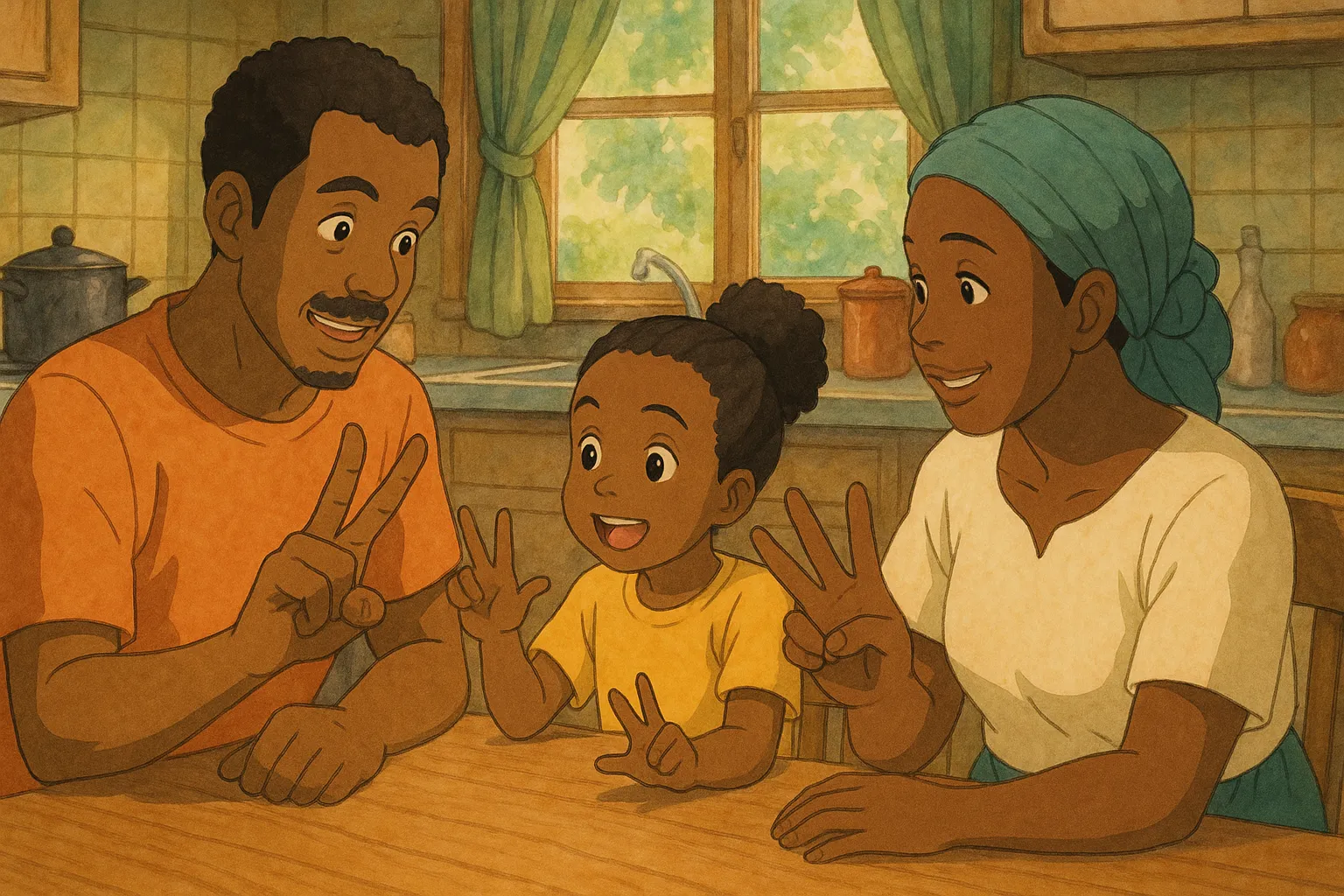
Here’s the five‑minute routine that worked for my family:

  1. Sit face‑to‑face with your child in a quiet spot.
  2. Hold up one finger and clearly say the word for “one” in your language.
  3. Ask your child to imitate—both the finger shape and the word.
  4. Repeat for two, three, and four, adding a finger each time.
  5. Turn it into a game—“How many fingers am I holding up?”—and celebrate every correct answer.

The magic lies in the tactile feedback. Children learn by touching and doing. When they see a finger, hear the word, and feel their own finger forming the same shape, multiple senses reinforce the memory. Within minutes, my child was proudly counting to five in Kirundi—something we’d struggled with for months using flashcards and apps.

How our counting book reinforces the habit: visual aids, practice pages, and cultural context (e.g., counting traditional objects).

While finger counting gets you started, keeping the habit alive requires a little more support. That’s why we created “I Can Count in Kirundi”, a bilingual/trilingual counting book for numbers 1–10.

Each page features:

  • Large, colorful illustrations of everyday objects and cultural items (like traditional baskets, drums, or fruits).
  • The number written in Kirundi, English, and French, so the whole family can follow along.
  • Simple practice prompts that encourage children to count the objects on the page.

The book turns a five‑minute lesson into a daily ritual. After our finger‑counting game, we open the book to the corresponding page and count the objects together. The visual cues help solidify the numbers, and the cultural references—like counting imigati (traditional cakes) or ibiharage (beans)—connect language to real‑life heritage.

What makes this approach work for diaspora families

  • No fluency required: The book includes English and French translations, so you can learn alongside your child.
  • Built for short attention spans: Each page focuses on one number, keeping sessions brief and frustration‑free.
  • Cultural pride woven in: Seeing familiar objects from their heritage makes children curious and proud to learn.

A quick win for overwhelmed parents

If you’ve been putting off language teaching because it feels too big, start with counting. It’s a small, manageable skill that delivers a quick win—for you and your child. That first “aha!” moment when they correctly count to five in your language can ignite a lasting enthusiasm for learning more.

And if you want a ready‑made tool to support that journey, “I Can Count in Kirundi” is designed precisely for this purpose. It’s the companion that turns a five‑minute trick into a lifelong habit.


Ready to turn counting into connection? Start your language‑learning journey today.
Previous ArticleTeach One Song a Week
Start Your Language Learning Journey