By Lionel Kubwimana
••8 min read
A simple weekly habit that uses traditional songs to teach language and culture.
I looked at my five‑year‑old singing “Twinkle, Twinkle, Little Star” for the hundredth time and felt a sudden pang of guilt. She knew every word to that English song, but she had never heard the lullabies my grandmother sang to me as a child. The songs that carried our family stories, our values, and our sense of belonging had somehow stayed silent.
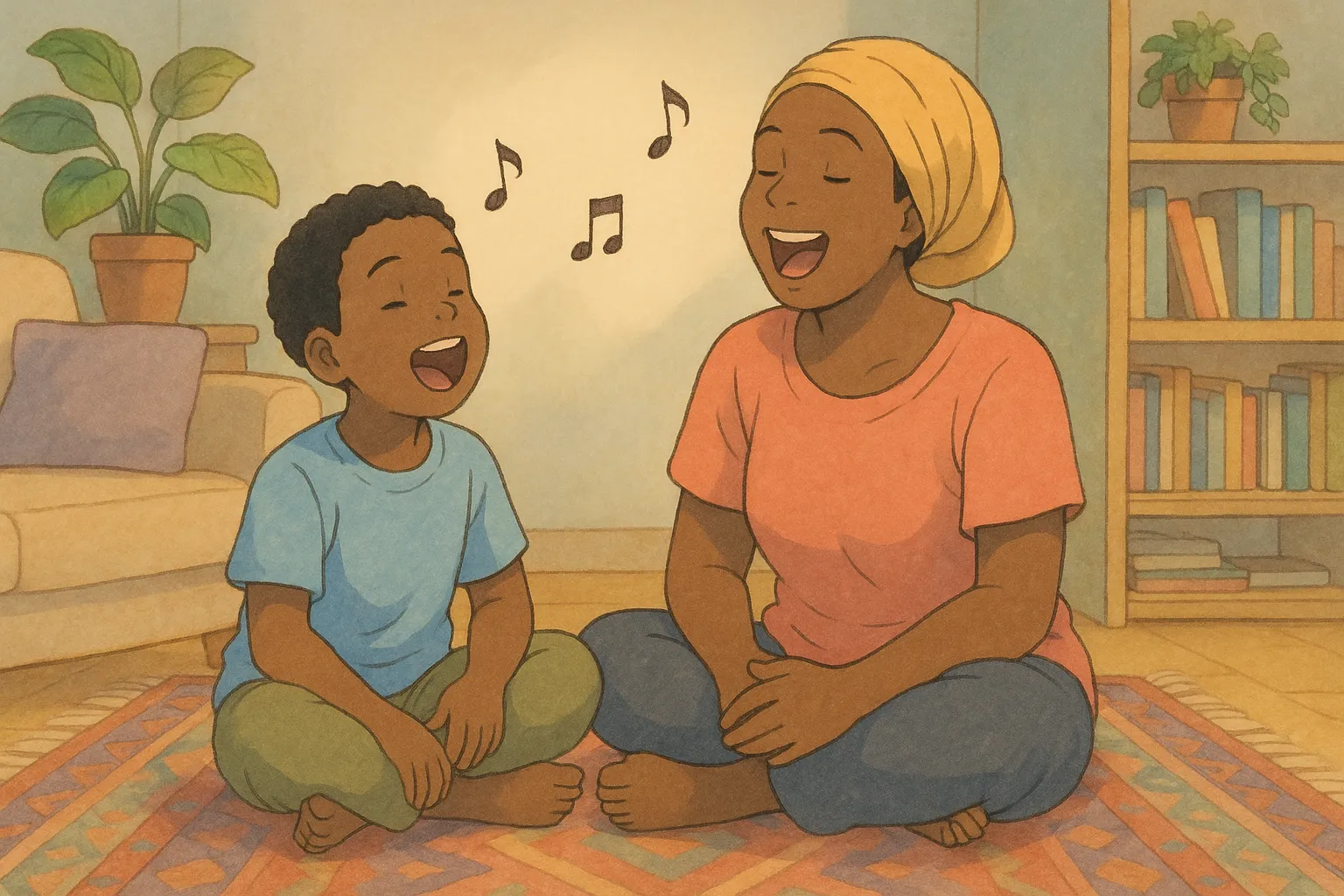
That evening, I sat down and taught her a simple Burundian song—just two lines at first. Within a week, she was humming it on her own, asking for the words she didn’t understand. A single song had unlocked a door to her heritage that I hadn’t known how to open.
If you’re a diaspora parent who wants to pass on your language but doesn’t know where to start, you’re not alone. Songs are the gentle, joyful bridge you’ve been looking for. This post will show you how one song a week can build a library of shared memories and vocabulary, and how our bilingual song book makes the ritual simple.
Music has a unique power to connect us. When we teach language through songs, we’re not just passing on vocabulary—we’re building memories that last a lifetime.
The steady beat of a song helps children anticipate what comes next, making it easier for new words to stick. Brains love patterns, and music is the most natural pattern of all.
Most traditional songs repeat verses or phrases, reinforcing key vocabulary over time. Repetition without boredom is the magic trick of music‑based learning.
Singing together creates joy, reduces stress, and strengthens the bond between parent and child. The emotional warmth wrapped around the words makes them far more memorable than flashcards or grammar drills.
This method is intentionally simple. No special training, no perfect pronunciation, no guilt about “not doing enough.”
Choose a traditional song from your culture that uses simple, repetitive words. It could be a lullaby you heard at bedtime, a wedding song, or a chant from your village. If you’ve forgotten the words, ask an older relative—they’ll light up at the chance to share.
Make the song part of your daily routine. Sing it during bath time, while cooking, or on the drive to school. The more you repeat the song, the more your child will absorb the language patterns and vocabulary. Don’t worry about singing perfectly—enthusiasm matters far more than pitch.
Point out important words in the song and explain their meaning. For example, in the Kirundi song “Ubugira,” you can describe how the word captures a moment of effortless grace—the way a dancer glides or a spoon slips through honey. These small explanations turn music into a real language lesson.
We created “Traditional Kirundi Songs” to give diaspora parents exactly the tool they need. The book features 20 authentic Burundian songs, each designed to make the “one song a week” habit effortless.
Each Kirundi verse is followed by its English translation, so you can understand the meaning and explain it to your child.
Every song includes background on its origin, highlighting the traditions and values it carries. You’re not just teaching words—you’re teaching heritage.
Audio guides recorded by native speakers make it easy to learn correct phrasing and tones. Simply scan the code and hear how the song should sound.
The book is organized into 20 chapters—one per song—with simple explanations and prompts for discussion. It’s ready to be your family’s weekly ritual.
The first step is the simplest: pick a song you remember and sing it tonight. Don’t worry about getting everything right. What matters is the connection you build, the heritage you preserve, and the joy you share.
If you’d like a ready‑made collection of songs with all the support materials, our “Traditional Kirundi Songs” book is waiting for you. It’s designed to make “one song a week” a habit that sticks—and a tradition your children will someday pass on to their own kids.