By Lionel Kubwimana
••3 min
For overwhelmed parents: the surprising power of three‑word phrases to build daily language moments without extra time.
You don't need to be fluent to pass on your language. In fact, starting small is often the most effective way to build lasting habits. The psychological concept of "chunking" explains why: our brains are wired to remember and process information in small, manageable pieces. By breaking language learning into three‑word phrases, you create cognitive chunks that are easy to recall and repeat.
For overwhelmed parents, the thought of immersing your family in a language can feel daunting. But what if you only needed three words to start? That's the power of tiny wins. Each time you and your child exchange a simple phrase like "Good morning" ("Habari za asubuhi" in Swahili, for example), you're not just practicing vocabulary—you're building momentum. Small successes create a positive feedback loop that makes you want to continue. Before you know it, those three‑word exchanges become a natural part of your daily rhythm.
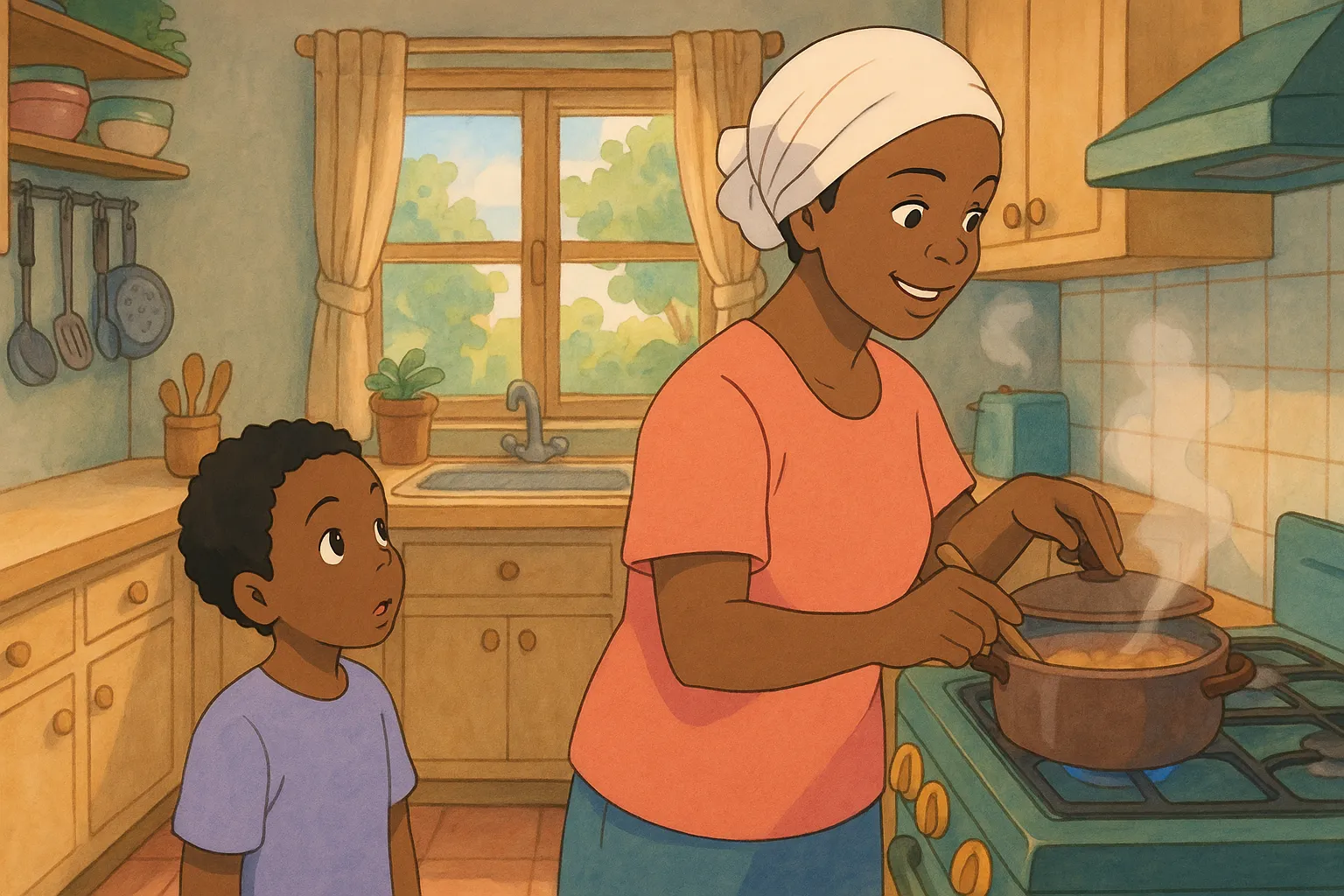
The best phrases are the ones you already say every day. Think about your family's routine: waking up, meals, playtime, bedtime. Each of these moments offers a natural opportunity for a three‑word phrase.
Start with these universal starters:
Choose phrases that fit your family's unique rhythm. If you always cook together, "Pass the salt" or "This smells good" can become your first chunks. If you walk to school, "Look at that bird" or "What a beautiful day" work perfectly. The key is to select phrases that feel authentic and repeatable—something you’d say even if you weren't intentionally teaching a language.
Don't worry about grammar or complexity. The goal is to create moments of connection, not perfect sentences. Your child will absorb the sounds, the rhythm, and the context long before they understand every word.
Consistency beats complexity every time. The secret to making these mini‑conversations stick is to attach them to existing habits—a technique known as "habit stacking." For example, pair your morning phrase with brushing teeth, or your thank‑you phrase with setting the table.
Here’s a simple plan:
Over time, those three‑word chunks will expand. "Good morning" becomes "Good morning, how did you sleep?" "Thank you" becomes "Thank you for helping me." The habit grows organically, without pressure or guilt.
Remember, you're not just teaching words; you're weaving your language into the fabric of your family’s life. Every three‑word phrase is a thread, and with enough threads, you’ll create a tapestry of connection that lasts a lifetime.