By Lionel Kubwimana
••5 min
Turn weekly calls into structured language lessons that bridge the gap between your child and their grandparents.
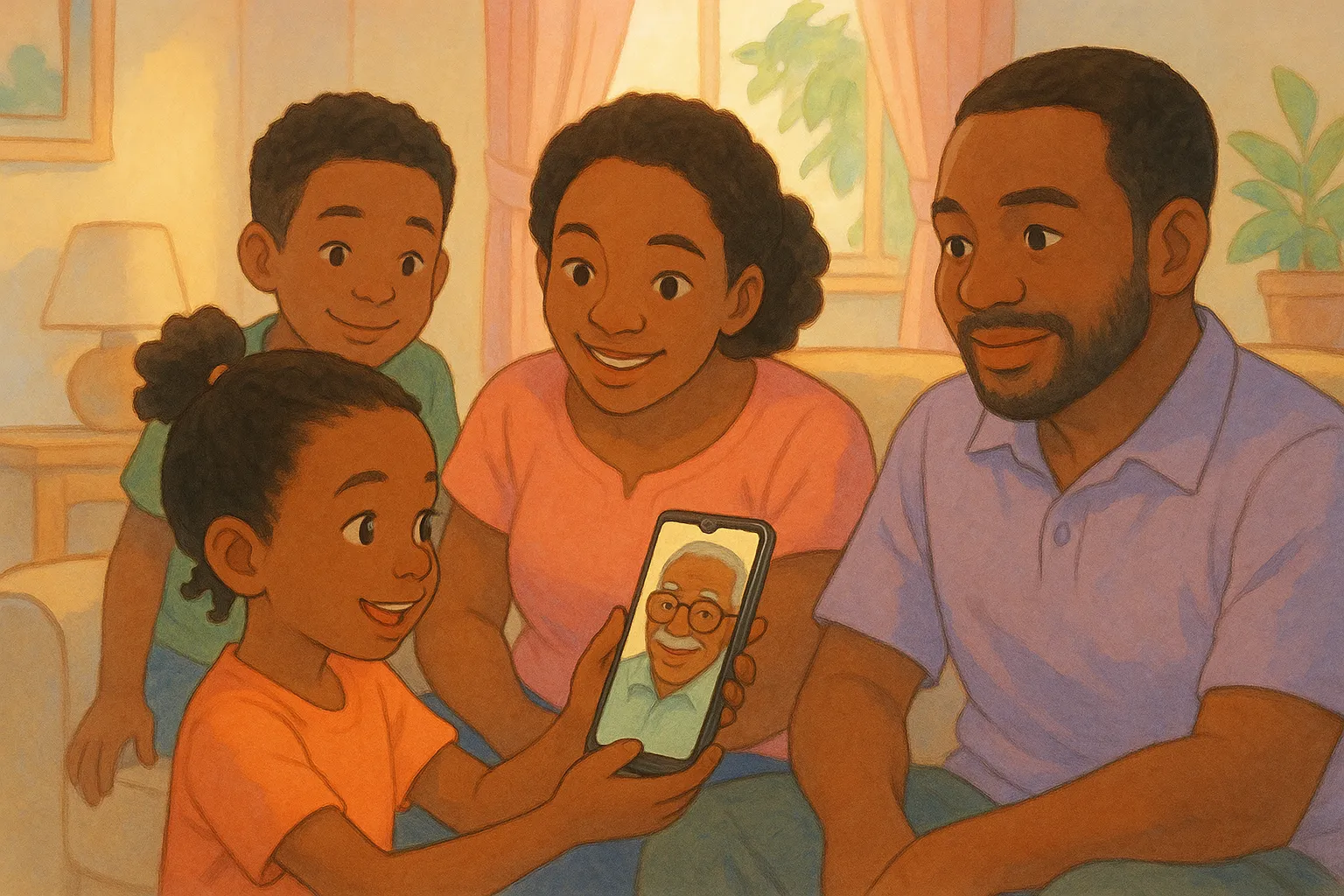
Every Sunday we call grandma in Lagos. My son understands her Yoruba but replies in English. The silence on the other end breaks my heart.
If you’re a diaspora parent, you know this moment. It’s the painful gap between generations—the language barrier that turns what should be a warm connection into a stilted exchange of smiles and awkward pauses.
But what if I told you that those weekly calls could become your child’s most effective language lessons? That with three simple steps, you can turn phone time into a structured, fun ritual that bridges the gap and builds real fluency?
Let’s explore how.
The distance isn’t just geographic. When grandparents live thousands of miles away, the cultural and linguistic distance can feel even wider. Our children grow up surrounded by English (or French, or Portuguese) at school, with friends, online. Meanwhile, their grandparents often speak only the mother tongue—Yoruba, Swahili, Amharic, Kinyarwanda.
The result? A one‑sided conversation. The child understands snippets but can’t reply. The grandparent struggles to follow the child’s rapid‑fire English. Both sides feel the disconnect, and over time, the calls become shorter, less frequent, more perfunctory.
Yet this gap is also an opportunity. Phone calls are a regular, predictable touchpoint. They’re already in the calendar. They carry emotional weight—children want to connect with grandparents, and grandparents ache to hear their voices. That built‑in motivation is the perfect fuel for language learning.
You don’t need to overhaul your routine. Just layer a simple structure onto the call you’re already making. Here’s how.
Before the call, sit with your child and pick one phrase they’ll practice. It could be:
Write it down on a sticky note, practice the pronunciation together, and agree that this is the phrase of the week. The goal isn’t fluency—it’s one meaningful exchange.
When the video starts, prompt your child to use the phrase. Let the grandparent know ahead of time that you’re working on this together, so they can help. When the child says the phrase, the grandparent’s face will light up. That positive reinforcement is magic.
Then, shift to a simple show‑and‑tell. Ask your child to hold up a toy or a drawing and describe it in the grandparent's language. Keep it short—two or three sentences. The grandparent can ask a simple yes‑no question in reply. This creates a real conversational loop, however basic.
After hanging up, celebrate! “You said ‘I love you’ in Yoruba! Grandma was so happy.” Write the phrase on a small whiteboard in the kitchen. Use it again at dinner. Repetition seals the memory, and connecting the phrase to a real emotional moment makes it stick.
Language learning works best when it feels like play, not homework. Here’s how to keep the momentum without burning out:
Rotate roles. Let your child be the “teacher” who corrects your pronunciation. Let them pick the phrase of the week. Give them a sense of ownership.
Use visuals. Create a “call calendar” with stickers for each successful exchange. Kids love seeing their progress.
Celebrate small wins. Did they remember to say “thank you” in Swahili without prompting? That’s a win. Acknowledge it.
Keep it short. A 10‑minute call with one practiced phrase is worth more than an hour of forced conversation. End while everyone is still smiling.
Invite cousins. If cousins are also learning the language, turn it into a group call. Sibling rivalry can be a powerful motivator.
Remember the why. This isn’t about perfect grammar. It’s about connection. When your child hears the joy in their grandparent’s voice, they’ll want to keep going.
Phone calls will never replace daily immersion. But they can build a bridge—one phrase, one smile, one Sunday at a time. That bridge doesn’t just carry words; it carries love, identity, and a sense of belonging that no textbook can provide.
Start this Sunday. Pick one phrase. Make the call. Watch the silence turn into a conversation.