By Lionel Kubwimana
••4 min
This week, reclaim your child's connection to heritage with one daily phrase. See how language prevents identity loss.
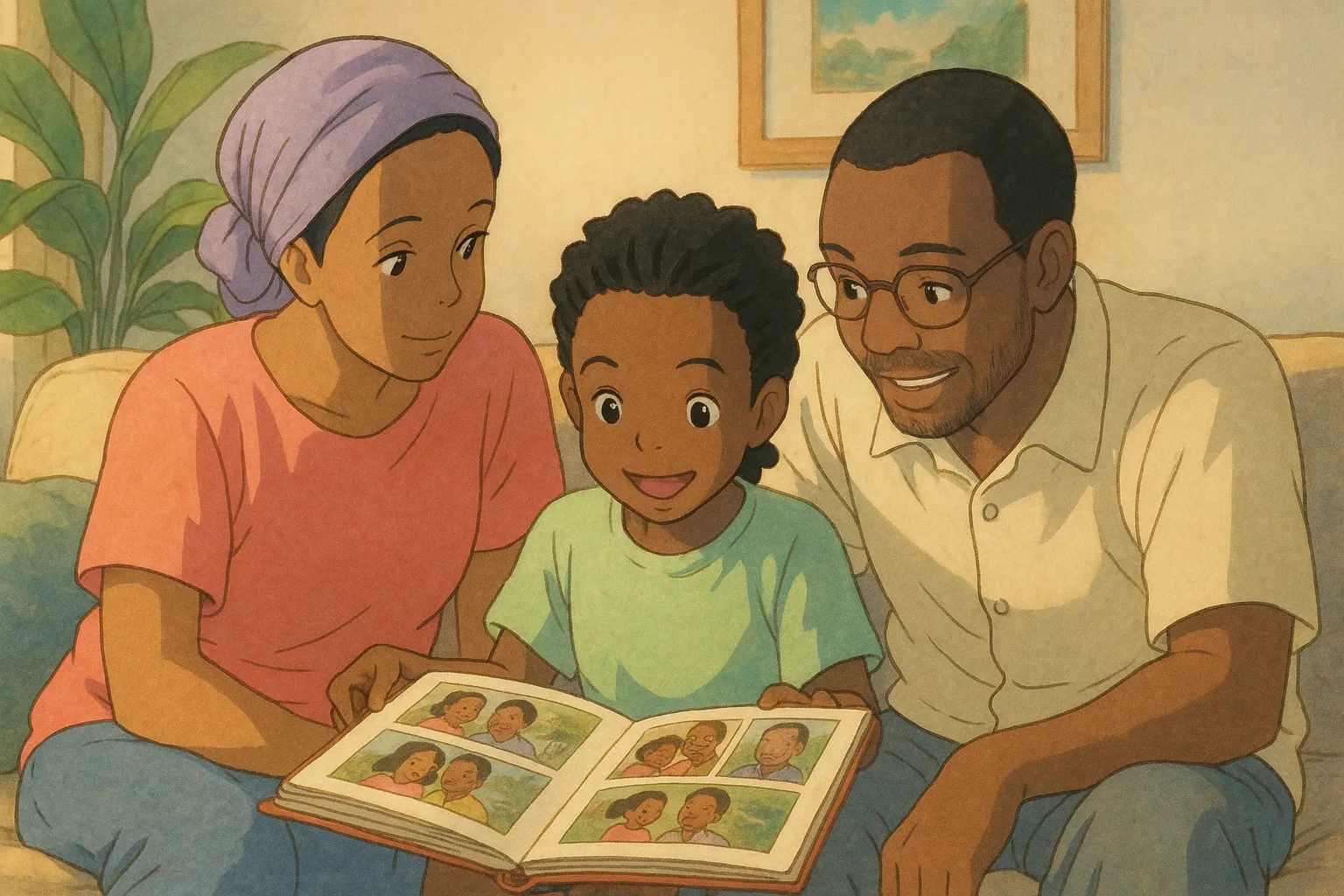
You see your child speaking English exclusively, and a cold dread creeps in. What if they lose the very thing that connects them to your family, your history, your soul? This fear is not irrational—it’s a biological alarm bell. Language isn’t just a communication tool; it’s the neural architecture of identity. When a child loses their heritage language, they lose more than vocabulary—they lose the cultural framework that tells them who they are, where they come from, and where they belong.
Decades of research in cultural psychology show that language acts as a “cognitive bridge” between generations. Each word, phrase, and grammatical structure carries implicit cultural models—values, norms, and worldviews. A child who hears “We are from Rwanda” in Kinyarwanda doesn’t just learn geography; they internalize a narrative of resilience, community, and continuity. Neuroscientists call this “linguistic encoding of identity.” The brain regions that process language (Broca’s area, Wernicke’s area) are deeply interwoven with the default mode network—the network that activates when we think about ourselves, our past, and our future.
When a heritage language fades, that neural bridge weakens. Studies of diaspora children reveal a stark correlation: those who lose their mother tongue by adolescence show measurably weaker connections to their cultural identity, reporting feelings of “floating between worlds” and “not fully belonging anywhere.” This isn’t mere nostalgia—it’s a measurable psychological deficit. The fear you feel is your parental instinct recognizing that your child’s identity is at risk.
You don’t need to teach the whole language this week. You only need one phrase. But it must be a phrase that carries your family’s essence. Think of it as a cultural anchor—a short, repeatable sentence that encapsulates what you want your child to remember about who they are.
Here’s a simple four‑step method:
Step 1: Identify your core identity value. What single quality defines your family’s story? Is it resilience? Hospitality? Faith? Community? Choose one.
Step 2: Find a phrase that expresses that value in your language. It could be a proverb (“Umuntu ni umuntu ngabantu”—“A person is a person because of other people”), a family motto (“We stand together”), or a simple declaration (“We are Rwandans”).
Step 3: Keep it short and rhythmic. Children remember rhythm and repetition. Aim for four to seven words.
Step 4: Test it for emotional resonance. Say it aloud. Does it stir something in you? If it does, it will stir something in your child.
Examples from other families:
Your phrase doesn’t have to be perfect. It just has to be yours.
Once you have your phrase, weave it into your daily rhythm with this seven‑day ritual. Each day adds a new layer of reinforcement.
Day 1 – Introduction: At breakfast, say the phrase clearly and explain its meaning. Ask your child to repeat it after you.
Day 2 – Connection: Relate the phrase to a family story. “Remember when Grandpa told us about… That’s why we say ‘We are storytellers’.”
Day 3 – Visualization: Draw a simple picture together that represents the phrase. Post it on the fridge.
Day 4 – Reinforcement: Use the phrase as a password—for Wi‑Fi, for a special treat, for entering their room. Make it playful.
Day 5 – Integration: Incorporate the phrase into a existing routine—say it while brushing teeth, tying shoes, or packing lunch.
Day 6 – Expansion: Ask your child to teach the phrase to a friend, a pet, or a stuffed animal. Teaching cements learning.
Day 7 – Celebration: Have a small “phrase party.” Cook a traditional dish, play music from your culture, and everyone says the phrase together. Take a photo and add it to your family album.
By the end of the week, the phrase will have moved from a foreign string of words to a familiar, cherished family code. It will become an invisible thread connecting your child to their heritage—a thread strong enough to withstand the pull of assimilation.
Fear doesn’t have to be a paralyzing force. It can be the fuel that drives you to act. This week, choose your phrase. Say it daily. Watch as a single sentence begins to rebuild the bridge you feared was breaking. Your language is your child’s birthright. Give them this one piece of it, and you give them a piece of themselves.