By Lionel Kubwimana
••6 min
A personal story about creating a homemade bilingual book with real photos, daily routines, and Kirundi words for my daughter.
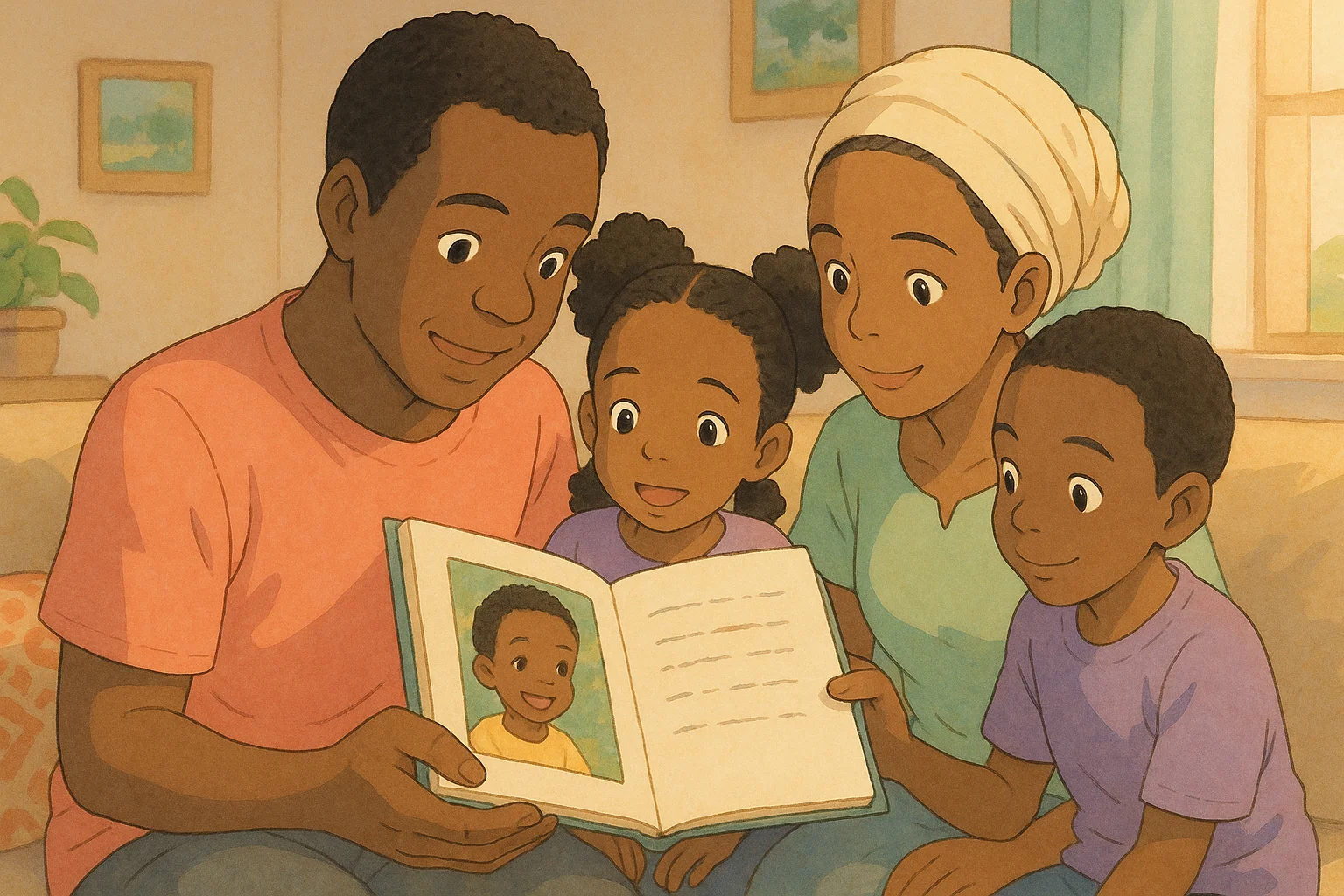
When my daughter Zoé was born, one thing mattered deeply to me: I didn't want Kirundi to disappear from her life.
Like many African parents in the diaspora, I know how easy it is for English or French to slowly take over everything. One day you realize your child understands your language a little less. Then they stop replying in it. Then the language slowly becomes something only the adults speak.
I didn't want Kirundi to become a “grandparents-only language” for Zoé.
As a father from Burundi raising a child in Europe, I wanted her to grow up hearing our words naturally. Not only during phone calls with family back home, but inside her daily life.
That desire is actually one of the reasons why I started publishing bilingual books on Amazon through lingu.africa.
But something unexpected happened.
Even after creating and publishing many bilingual books, I still felt like something was missing for my own daughter.
The books were useful. The illustrations were beautiful. But they still weren't our life.
So one weekend, I decided to create a tiny homemade bilingual book using photos of Zoé herself.
And honestly, it changed everything.
I spent years looking for bilingual children's books in African languages.
Sometimes the books were too academic. Sometimes the vocabulary felt unnatural. Sometimes the stories were beautiful but emotionally distant from our actual life.
I kept seeing the same kinds of words:
Those words matter. But that's not what we say every morning at home.
Real life with a toddler sounds more like:
That's the language children absorb first.
And I noticed something else: Zoé reacted completely differently when she saw herself.
Not a cartoon child. Not a stock illustration.
Her own face. Her own toys. Her own pajamas. Her own daily routines.
That emotional connection changed her attention immediately.
So I stopped trying to create the “perfect book.”
Instead, I made something personal.
I kept the idea extremely simple.
One photo. One sentence in Kirundi. One sentence in French or English.
That's it.
No complicated story. No long paragraphs. No fancy design.
Just real life.
Here are a few examples from the book:
I took the photos with my phone during normal moments across the weekend.
Then I assembled everything using a simple template.
Honestly, the hardest part wasn't the design.
It was choosing which moments mattered most.
Because when you become a parent in the diaspora, you start realizing something:
Language transmission doesn't happen during “lessons.”
It happens during ordinary moments.
A lot of parents think:
I could never make a book.
But the truth is: you probably already have everything you need.
You have:
That's already enough.
You do not need to be an illustrator. You do not need expensive software. You do not need publishing experience.
Before publishing books on KDP, I had never made children's books either.
I learned step by step.
And honestly, your child will not care if the margins are perfect.
What matters is emotional recognition.
They see themselves. They hear your language. They feel connected.
That feeling is powerful.
At first, I didn't even use a professional printer.
I simply:
That was enough for Zoé.
Later, because I already publish books through KDP, I experimented with creating cleaner printed versions too.
But the homemade version remained special.
There's something deeply emotional about a child holding a book made by their own parent.
Especially in a language they rarely see represented around them.
After a few days, Zoé started repeating some of the Kirundi phrases outside reading time.
Not because I forced lessons. Not because we drilled vocabulary.
But because the words were connected to her own life.
That changed how I think about language learning for children.
Kids connect faster when the language feels emotionally close.
And nothing is closer than:
I know many diaspora parents feel intimidated.
They think:
But honestly?
Sometimes the most meaningful bilingual book your child will ever own is the one you create yourself.
Even if it's imperfect. Even if it's only five pages. Even if it's printed at home.
Because your child is not only learning words.
They're learning:
My culture matters. My family story deserves to exist.
That message stays with a child for a very long time.
Don't start with a 40-page masterpiece.
Start with one page tonight.
Take a photo of your child doing something ordinary. Write one sentence in your language. Write the translation underneath.
That's enough.
One page becomes two. Two become five. And suddenly, you have something your child may remember forever.
If you create one, I'd genuinely love to see it.
Share it and tag @lingu.africa on Instagram or TikTok.
Maybe your story will inspire another parent too.
Bon courage,
Lionel