By Lionel Kubwimana
••3 min
How to turn bedtime guilt into language exposure by switching just one book for one week.
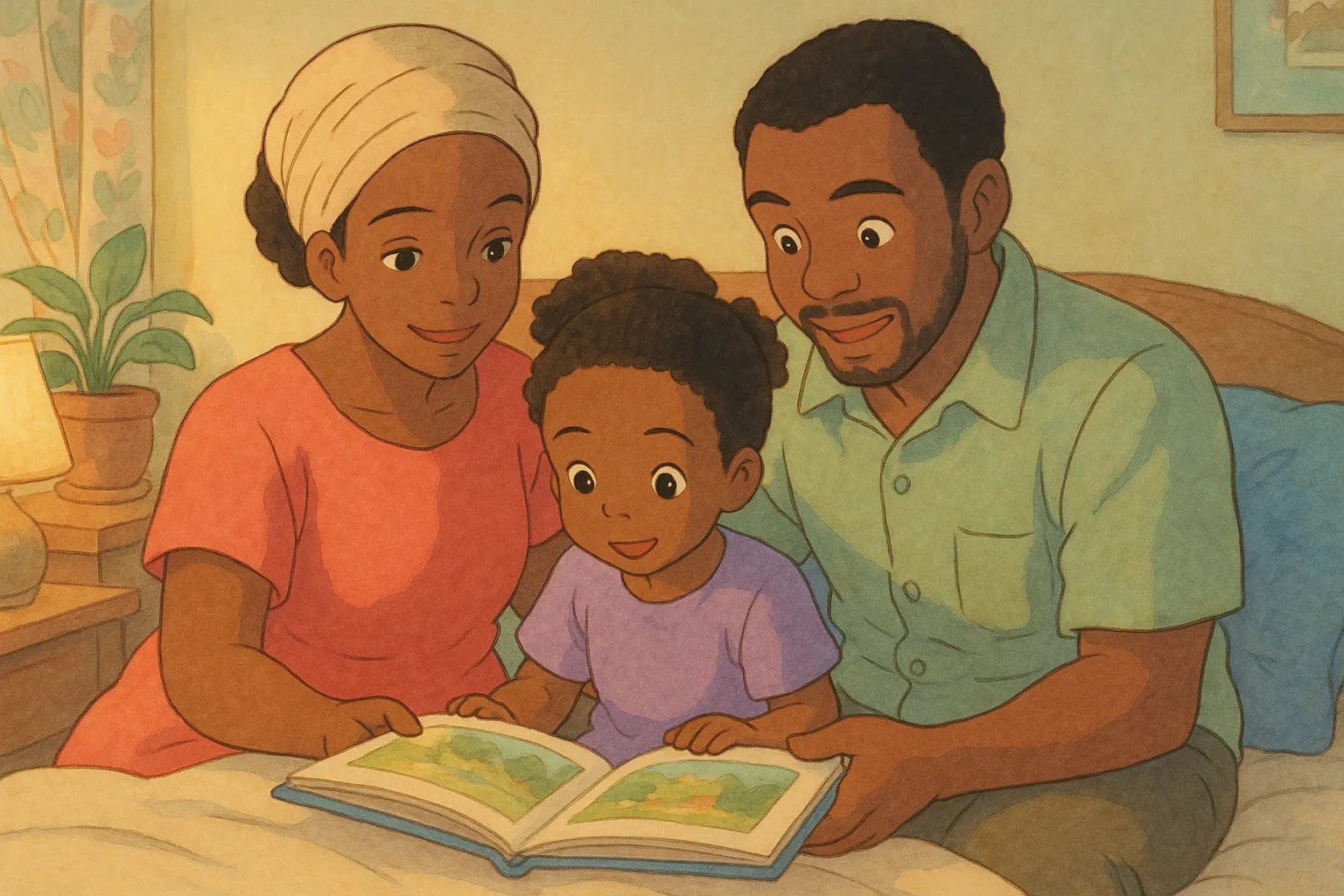
Bedtime is often the only quiet moment in a parent’s day—and for many of us raising bilingual children, it can also feel like the last chance to squeeze in some language exposure. That pressure, though well-intentioned, often backfires. We rush through a story, fumbling with unfamiliar words, while our child just wants the comfort of a familiar ritual. The result? Guilt, frustration, and a missed connection.
After a day of school, chores, screens, and extracurriculars, bedtime is the one window where you have your child’s full attention. No competing distractions, no urgent emails, no sibling interruptions. It’s natural to think, “This is my moment to teach something meaningful in our heritage language.”
But that “teaching” mindset turns a cozy ritual into a performance. You start correcting pronunciation, explaining grammar, or translating every other sentence. Your child picks up on the tension, resists, and the whole experience becomes a push‑pull struggle. The very pressure that was supposed to help ends up poisoning the well.
Worse, when bedtime feels like a daily test, you’re likely to avoid it altogether—or give up after a few failed attempts. The guilt builds, and the language gap widens.
Instead of overhauling your entire bedtime routine, try this tiny, sustainable hack:
Pick one predictable book – Choose a story your child already knows by heart. Something with repetitive phrases and clear illustrations. “Goodnight Moon,” “Brown Bear, Brown Bear,” or a favorite local folktale they’ve heard dozens of times.
Translate only key phrases – Don’t translate the whole book. Pick three to five key phrases that repeat throughout the story. For “Goodnight Moon,” you might say “goodnight” in your language, “moon,” “room,” and “quiet old lady whispering hush.” That’s it.
Keep the ritual exactly the same – Read at the same time, in the same chair, with the same tone. The only difference is that a handful of words are now in your target language. No explanations, no quizzes, no corrections.
The goal isn’t comprehension on day one. It’s exposure without pressure. You’re weaving the new language into a familiar, safe context—exactly how we naturally acquire language as infants.
Day one might feel awkward. Day two, your child might ask why you’re saying “goodnight” differently. By day three or four, they’ll start anticipating those swapped words. By the end of the week, they’ll likely be repeating them with you.
What’s happening under the surface?
Comprehension builds – Because the story is already understood, the new words are anchored to known meanings. The brain connects “goodnight” in English with “habari ya usiku” in Swahili effortlessly.
Resistance drops – There’s no “lesson” to rebel against. It’s just the same cozy story with a few new sounds. The emotional safety of the ritual remains intact.
Confidence grows – Both of you. You’ll feel less guilty because you’re actually doing something consistent. Your child gains a sense of mastery as they recognize and eventually produce the new phrases.
After a week, you can rotate in another book, or add a few more phrases to the same one. The key is to keep it tiny, predictable, and stress‑free.
Language acquisition is a marathon, not a sprint. The 5‑minute bedtime switch proves that you don’t need hours of dedicated instruction to make progress. You just need a few minutes of intentional, repeated exposure embedded in an existing routine.
When you remove the pressure, you restore the joy—and joy is what makes language stick. So tonight, pick one book, swap five words, and watch what happens. You might be surprised how much a little switch can change.