By Lionel Kubwimana
••4 min
Feeling guilty about not teaching your heritage language? That guilt is a sign of love—here’s how to turn it into action.
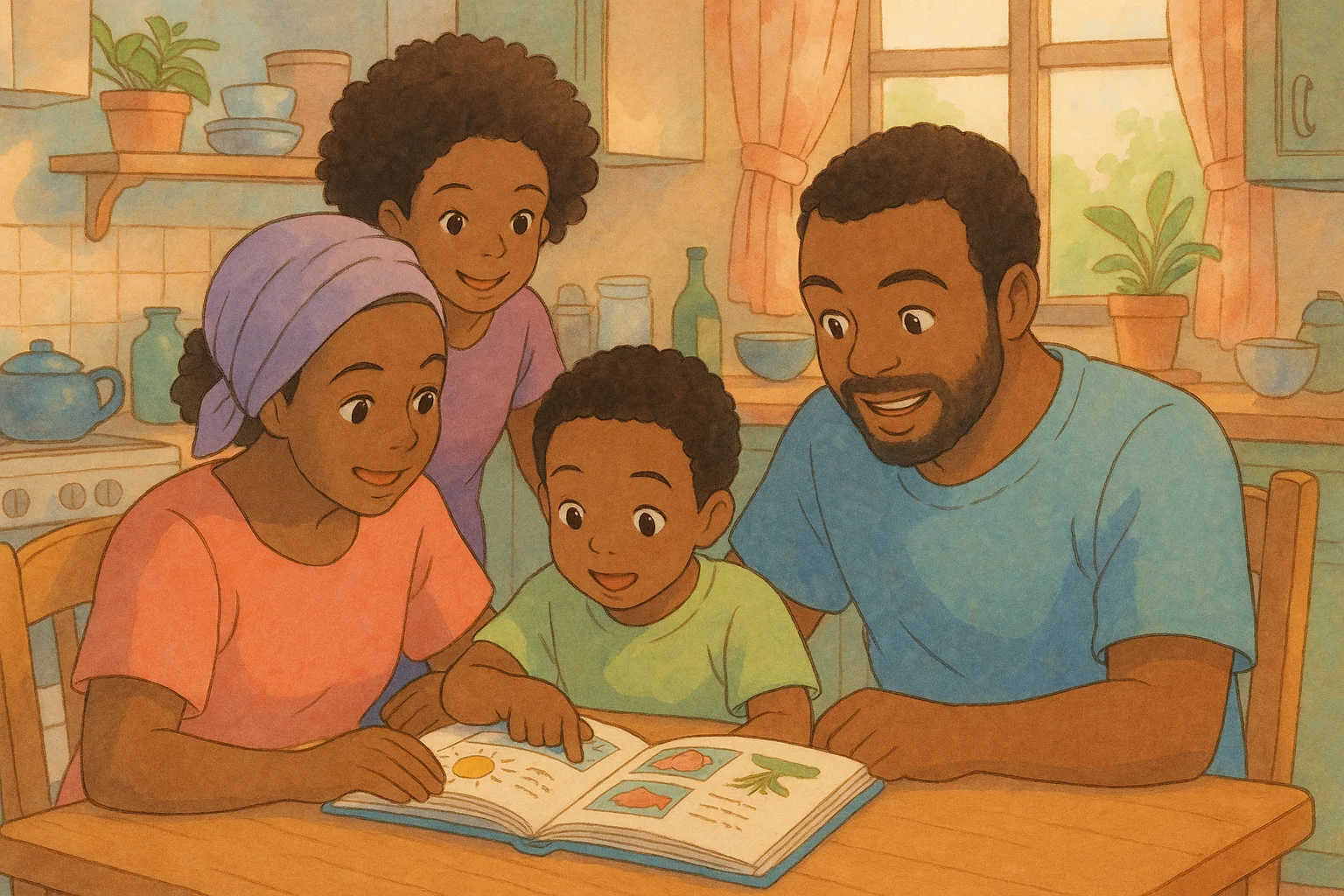
You promised yourself you'd teach your child your mother tongue. But each day ends with another conversation in English.
That guilt you feel when you tuck your child in at night—the nagging thought that you’re failing to pass on your heritage—is not a sign of failure. It’s a sign of love.
It means you care deeply about your roots, your identity, and your child’s connection to them. The very fact you feel guilty shows you haven’t given up. You still hold that dream close.
Let’s talk about where that guilt comes from, why it can paralyze you, and—most importantly—how to turn it into tiny, sustainable actions that actually move your family forward.
For most of us, the pressure comes from two places: inside and outside.
Internal pressure is the voice that whispers, “You should be doing more.” It’s the memory of your grandmother’s stories, the fear that your child will never understand the jokes, the proverbs, the songs that shaped you. It’s the quiet worry that by not teaching your language, you’re erasing a piece of your family’s history.
External pressure comes from well-meaning (and sometimes not-so-well-meaning) relatives, friends, or even strangers. “Does she speak your language?” “You’re raising them in America, so maybe English is enough.” “We never taught our kids, and they turned out fine.”
Both kinds of pressure can pile up until you feel stuck—caught between the ideal bilingual family you imagined and the exhausting reality of busy schedules, toddler tantrums, and the sheer effort of teaching a language that isn’t the default around you.
But here’s the truth: Guilt is not a verdict. It’s a signal. It tells you something matters to you. And that’s a powerful starting point.
Guilt loves to whisper, “You’ve already missed the window.” “It’s too late.” “You should have started when they were babies.” That kind of thinking keeps you stuck in the past, focused on what you haven’t done instead of what you can do.
Neuroscience actually offers us a kinder perspective. The brain remains capable of learning languages throughout life—especially when motivation is high. Your child’s brain is still incredibly plastic. And yours is, too.
So let’s reframe guilt as caring energy that’s looking for a direction. Instead of “I feel guilty because I haven’t taught them anything,” try “I care so much about our language that I want to start today.”
One practical shift: replace “I should…” with “I get to…”
That tiny linguistic pivot turns obligation into opportunity. It moves you from guilt to agency.
You don’t need to overhaul your life or become a full-time language teacher. Start with habits so small they’re almost impossible to skip.
Pick one object in your home that you see every day—the fridge, the front door, the sofa. Learn (or remember) its name in your heritage language. Then, each time you pass it with your child, say the word.
“That’s the mlango.” “Let’s put this in the friji.”
One word. One object. Repeated daily. In a month, your child will have 30 new words anchored to real things in their world—without a single formal lesson.
Choose a simple, comforting sound from your language—a lullaby melody, a rhyming phrase, a goodnight blessing. Say or sing it every night as part of the bedtime routine.
The repetition builds familiarity. The soothing tone creates positive associations. And over time, that sound becomes a touchstone of safety and love in your mother tongue.
Attach a tiny language moment to an existing routine you already do.
By piggybacking on habits you already have, you remove the need for extra time or planning. The language simply rides along.
The magic of these micro-habits isn’t just in the vocabulary they build. It’s in the mindset they create.
Each time you say that one word, sing that lullaby, or count those teeth, you’re sending a quiet message to yourself and your child: Our language belongs here. It’s part of our daily life. It matters.
You’re also rewiring your own relationship with guilt. Instead of a heavy weight, it becomes a gentle nudge—a reminder to take one small step today.
And those steps add up. A year from now, you won’t be looking back at a mountain of guilt. You’ll be looking at a trail of words, songs, and moments that slowly, surely, built a bridge between your past and your child’s future.
Tonight, after you tuck your child in, don’t let the guilt just sit there. Turn it into action.
Pick one of the three habits above. Just one. Try it tomorrow.
And remember: you’re not failing. You’re caring. And that caring—channeled into tiny, consistent actions—is how heritage languages stay alive, one word, one lullaby, one counted tooth at a time.