By Lionel Kubwimana
••6 min read
Turn your home into a language learning lab with this simple labeling method that uses objects you already own.
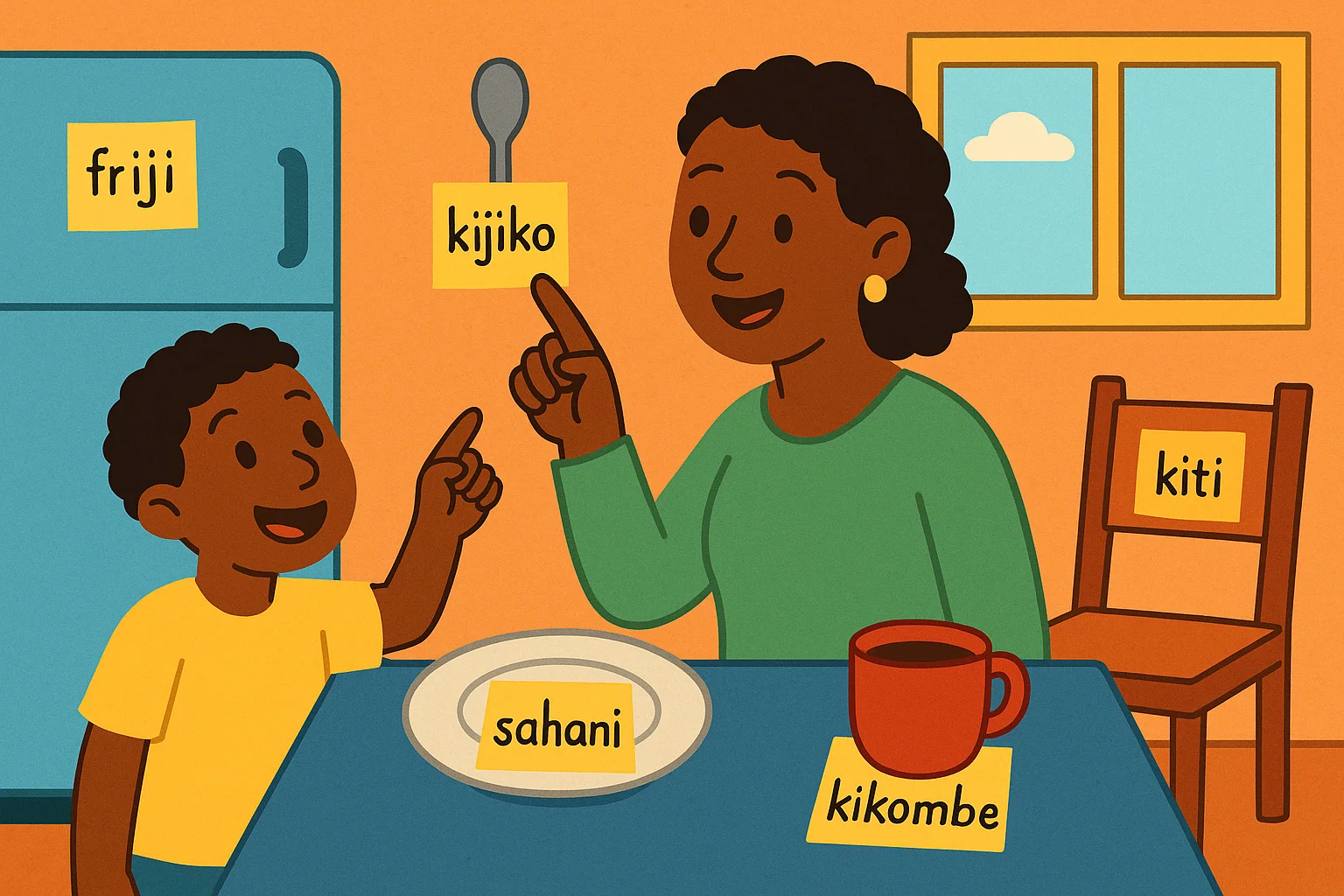
“I used to think I needed special flashcards and lesson plans—until I realized my kitchen was already full of vocabulary.”
If you're a parent who feels guilty about not having enough time to teach your child an African language, this post is for you. You don't need a fancy curriculum or hours of preparation. Your home is already a living language lab, waiting to be unlocked.
The secret? Turn ordinary household items into a living language lab by labeling them in your target language and using them during daily activities.
Start by walking through your home with fresh eyes. Look for items you and your child touch, see, or use every day. The goal is to pick objects that are already part of your routine—things you naturally talk about.
Here's a starter list you can adapt:
Don't overthink it. Write down the first 10 that come to mind. These will become your first “vocabulary set.”
Why start with 10? It's enough to feel like progress, but small enough not to overwhelm you or your child. You're not trying to label the whole house overnight—you're building a foundation.
Pro tip: Involve your child in the selection. Ask them, “Which things do we use every day?” Their answers might surprise you and make them more invested from the start.
Once you have your list, it's time to turn those objects into language lessons. Grab a pack of sticky notes and a marker.
For each object:
If you're not sure how to spell or pronounce a word, use a resource like our bilingual vocabulary book My First Words in Swahili (or a similar book for your language). You can also ask a family member, search online, or use a dictionary app.
Pronunciation matters, but perfection doesn't. The goal is exposure, not flawless accent. If you're learning alongside your child, that's okay—you're modeling curiosity and resilience.
Keep the labels up for at least a week. Every time you or your child passes the object, say the word. Make it a game: “Can you remember what this is called?”
Labels alone won't teach fluency. The real magic happens when you weave the words into your daily interactions.
During meals:
During chores:
During play:
The key is natural repetition. You're not stopping life to have a “language lesson.” You're simply swapping a few English words for your target language during activities you'd already be doing.
If your child corrects your pronunciation, celebrate it! That means they're listening and engaging.
After the first week, you'll notice something wonderful: those 10 words are starting to stick. Now it's time to grow your vocabulary slowly and sustainably.
Each week, add one new object to your labeled collection. Choose something that's relevant to the season, a recent event, or your child's current interests. For example:
By adding just one item per week, you'll build a practical vocabulary of over 50 words in a year—without ever feeling like you're “studying.”
Track your progress on a simple chart or calendar. Let your child place a sticker each time you add a new word. Visual progress builds motivation for everyone.
You're not adding another task to your day. You're repurposing moments you already have.
This approach aligns with what language experts call “comprehensible input”—learning through meaningful, contextual exposure. Your child isn't memorizing random words; they're connecting sounds to objects they use and see every day.
If you want a ready‑made set of everyday words to start with, our bilingual vocabulary books (like My First Words in Swahili) are designed for exactly this purpose. Each page features a clear image of a common object alongside its name in both English and the target language. You can:
Think of the book as your cheat sheet—there when you need it, invisible when you don't.
Many diaspora parents worry they aren't “qualified” to teach because they aren't fluent. Here's the truth: you don't need to be fluent to start.
You're not aiming for academic mastery. You're aiming for connection. Learning alongside your child is powerful. It shows them that language is a journey, not a destination, and that it's okay to make mistakes.
If you're unsure about a word, look it up together. If you mispronounce, laugh and try again. Your willingness to try matters more than perfect accuracy.
Once you have a handful of labeled objects, try these quick, no‑prep games:
Keep it light. The goal is joy, not perfection.
You don't need a classroom. You don't need expensive materials. You don't need hours of free time. You just need to see the objects around you as opportunities.
Start with the fridge. Start with the door. Start with the spoon.
Each labeled item is a small, silent teacher—a reminder that your language lives here, in your home, in your daily life. And each time you say that word aloud, you're not just teaching vocabulary. You're weaving your heritage into the fabric of your family's everyday story.
That's something no flashcard can ever do.