By Lionel Kubwimana
••6 min read
How bilingual families use code-switching to stay connected, build identity, and raise emotionally strong and cognitively sharp kids.
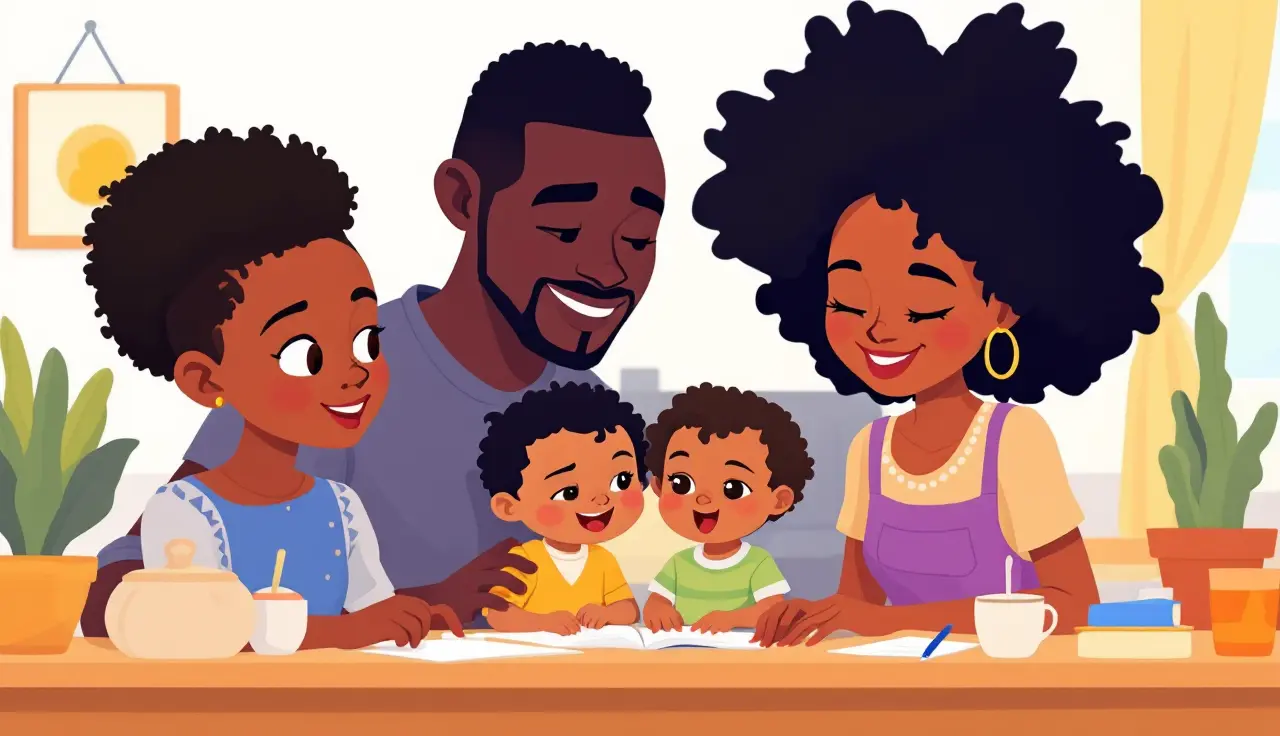
In Atlanta, Georgia, the Ngoma family begins each morning with a joyful mix of languages—Kirundi and English blend together at breakfast. Their conversations shift easily, with jokes and reminders flowing across both tongues. For them, this way of speaking isn’t just habit. It’s how they stay connected to where they come from while making a home in a new place.
This shifting between languages is called code-switching. It’s a common practice in bilingual families—especially those in the African diaspora. More than just a way to talk, code-switching keeps traditions alive and relationships strong. It helps families stay emotionally close and helps kids grow into confident, flexible thinkers.
This post breaks down how code-switching works, why it matters, and what families can do to support it. You’ll find stories, strategies, and examples from African families living in U.S. cities like New York and Los Angeles. These insights can help any parent create a home where both heritage and growth are equally valued.
Code-switching is when people switch between languages during a conversation. It’s not random. In fact, it often follows clear rules based on context, audience, or topic.
There are two main types:
People switch languages for many reasons:
A bilingual family in Los Angeles might speak English during homework time and switch to Kirundi or Swahili during family meals. According to the Center for Applied Linguistics, code-switching is a sign of high language skill, not confusion.
Code-switching allows families to express emotions that feel more authentic in one language. Sometimes, a certain feeling or cultural idea only makes sense in the language it comes from.
During Día de los Muertos, for example, a family may use both Spanish and English. They might share memories in Spanish and talk logistics in English. This dual-language flow bridges generations and cultures.
Families who switch languages regularly:
Every code-switch is a choice that honors identity.
Not everyone understands code-switching. People who only speak one language may think switching shows a lack of fluency.
In schools, this misunderstanding can turn into pressure. Teachers may ask students to “stick to English” or discourage language mixing, even when that mixing helps the child learn and communicate better.
This can lead to:
The Journal of Multilingual Education says many schools are not prepared to support code-switching. They often lack resources or teacher training. That’s why parental and educational advocacy is essential.
Certain emotions are easier to express in a native language. In emotional moments, people often shift into the language they feel most connected to.
In a Mexican-American family, using Spanish during Día de los Muertos can help convey grief and joy in culturally meaningful ways. African families may switch to Kirundi or Lingala when comforting a child.
This builds emotional clarity and strengthens trust.
Language is culture. Parents who teach their children traditional songs, prayers, or proverbs in their native language pass on more than words—they pass on identity.
Code-switching helps:
It shows that both languages—and both worlds—have value.
Mixing languages creates a family rhythm. It becomes a unique language of love, jokes, and shared meaning.
A bilingual couple might say “I love you” in two languages during one conversation. Parents might correct a child in English, then comfort them in their native tongue.
The Family Communication Journal says that this kind of communication builds trust and intimacy. It creates space for authenticity.
When arguments happen, switching languages can calm the moment. Some languages have gentler tones or words that better express empathy.
A Chinese-American parent might switch from English to Mandarin to soften a disagreement. This change in tone can make the child feel understood, not just corrected.
The International Journal of Bilingualism reports that language choice during conflict affects how well families resolve problems. Code-switching helps keep the emotional connection alive.
Older generations may want language purity. They might worry that switching “dilutes” the native tongue.
Younger generations, especially kids born in the U.S., often blend languages naturally. For them, mixing isn’t a mistake—it’s how they express who they are.
In Filipino-American families:
The Pew Research Center found that understanding both viewpoints helps families stay connected. It allows space for teaching, listening, and evolving together.
Code-switching builds brain power. Kids who switch languages must think about:
This strengthens executive function—skills like attention, working memory, and flexibility.
A longitudinal study showed that bilingual kids who code-switch often do better than monolingual peers on tasks involving mental switching and focus.
The American Psychological Association confirms: dual-language exposure makes young brains more adaptable.
Kids who hear and use both languages develop stronger language skills overall.
They gain:
In French-English toddler studies, code-switching led to faster speech milestones and stronger literacy skills. It helps kids see how different languages can express similar ideas.
Language switching improves emotional awareness.
Kids raised in code-switching homes are better at:
They learn that communication isn’t just about words. It’s about connection. Bilingual teens often report feeling more tuned into others’ feelings, especially in diverse settings.
Even today, many schools and social environments don’t fully support bilingualism. Monolingual norms can make kids feel that switching is wrong.
Teachers might say, “Only speak English here,” without realizing that code-switching:
To support bilingual students, schools should:
When students are allowed to use their full language repertoire, they do better in class—and feel more seen.
Parents can create a code-switching-friendly home by:
Teachers and parents can also partner. Ask your child’s school to include cultural texts and recognize bilingualism as a strength. That validation helps kids take pride in who they are.
Filipino-American families often use both Tagalog and English at home. This creates a balanced space where everyone feels heard and valued.
In Chinese-English households, language switching during conflict resolution helps build trust. These families show that switching languages isn’t about confusion—it’s about connection.
Each story is a reminder that code-switching isn’t just possible. It’s powerful.
Here’s how parents can support bilingual growth:
Supporting both languages without stress helps children thrive.
Studies consistently show that code-switching:
These benefits are lifelong and apply across academic and personal settings.
Code-switching isn’t just about words. It’s about identity, memory, and human connection.
When families embrace it, they:
Let’s create homes and schools where bilingual kids don’t have to choose one part of themselves. Let’s support a future where they can speak, think, and love in all their languages.