By Lionel Kubwimana
••8 min read
Struggling to get your kids to speak your African language? You're not alone. Here's what's really happening and simple ways to fix it.
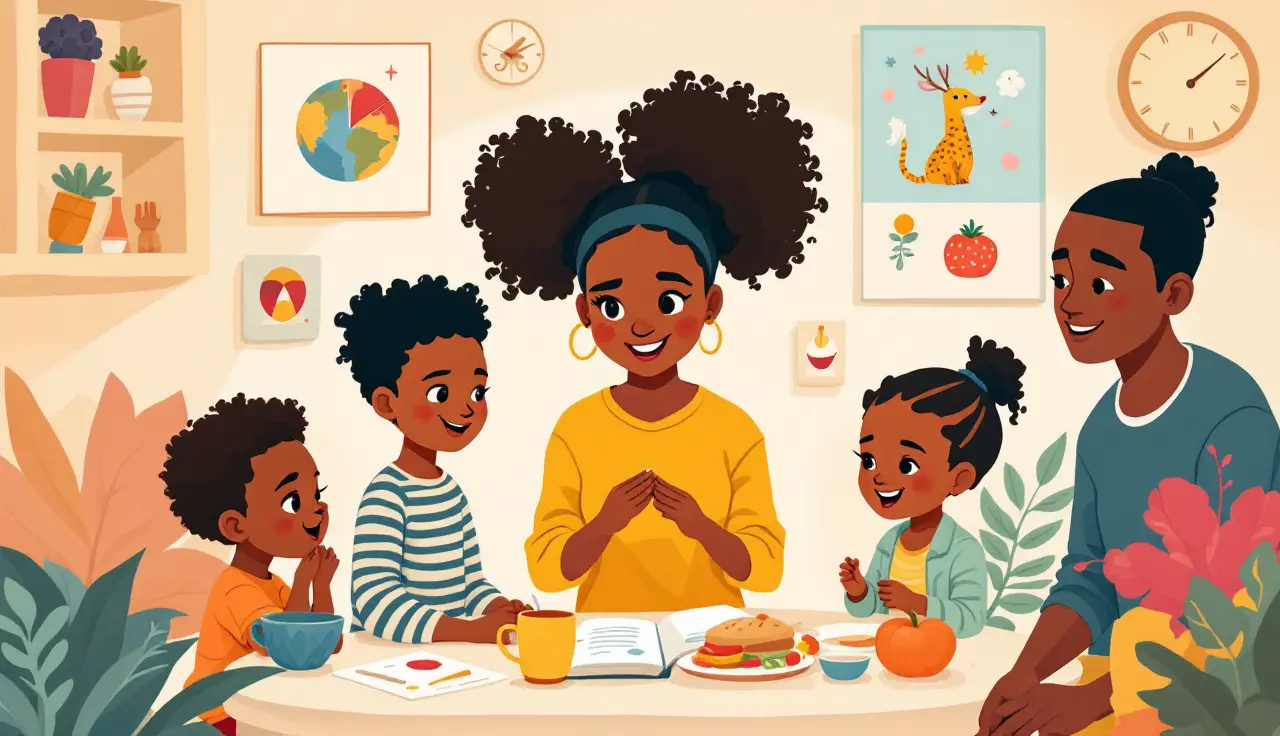
Picture this: You ask your 8-year-old to speak Yoruba at dinner. They roll their eyes and answer in English. Again.
If this sounds familiar, you're not alone. Thousands of African parents living abroad face this same struggle every day.
You want your kids to speak your language. They want to fit in with their friends. And somewhere in the middle, you're wondering if you're failing as a parent.
Here's the truth: You're not failing. Teaching heritage languages abroad is hard work. But it's also one of the most important gifts you can give your children.
This article will show you why kids resist their heritage language and give you 7 simple ways to change that. No guilt trips. No impossible strategies. Just real solutions that work for busy families.
When your child speaks your language, they're getting so much more than words. They're connecting to:
Research shows that kids who speak their heritage language have better problem-solving skills and stronger family bonds. They also feel more confident about who they are.
Your kids see their friends speaking English (or French, German, etc.) everywhere. At school, on TV, in video games. Their heritage language feels different. And at their age, different can feel scary.
Let's be honest - your heritage language probably has sounds, grammar rules, or writing systems that English doesn't have. For kids already juggling school and activities, it can feel like extra homework.
Kids live in the moment. They can't see how speaking Amharic or Swahili will help them make friends or pass their math test today.
Sometimes we get so worried about preserving our culture that we turn language into a battlefield. When learning feels forced, kids naturally push back.
If your child is the only Somali speaker in their class, they might feel self-conscious about their language. This is totally normal.
What doesn't work: Formal lessons every night after homework What does work: Games, songs, and activities they actually enjoy
Try this today:
Does your daughter love cooking shows? Watch them in your language together. Is your son obsessed with soccer? Find games where the commentary is in your mother tongue.
Examples that work:
Instead of calling it study time, make it family time. During this hour:
The key is making your language the bridge to fun family memories.
Kids love screens. Use that to help, not hurt, your language goals.
Apps and resources that help:
Your family shouldn't do this alone. Connect with other families who speak your language.
How to find your tribe:
Every time your child uses your language, make it a big deal. Not in an embarrassing way, but in a way that shows you're proud.
Small celebrations that work:
Some days will be harder than others. Your kids might go through phases where they refuse to speak your language at all. This is normal.
Remember: You're planting seeds. Even if you don't see results today, you're building something important for their future.
This moment will come. Here's how to handle it without starting a fight:
Take a deep breath. Getting upset will only make them more resistant.
"Can you tell me why you don't want to speak Yoruba today?" Sometimes there's a specific reason you can address.
"Would you rather tell me about your day in Twi or help me cook dinner while we speak Twi?" Giving options makes them feel in control.
"When you speak our language, it makes me feel so connected to you. It reminds me of my grandmother, who would have loved to hear you speak."
If they're really resistant, it's okay to step back for a few days. Force never works long-term.
You're not alone if you sometimes think:
Here's what to remember:
Raising kids in a different culture than where you grew up is hard. Cut yourself some slack.
Kids can learn languages at any age. Even if they're teenagers, they can still connect with their heritage.
Speaking your language 10 minutes a day is better than not speaking it at all.
Many diaspora kids who resisted their heritage language as children become grateful as adults.
Sometimes you need more support than just family efforts. Consider getting help if:
Where to find help:
Don't try to do this alone. Here's how to build a village that supports your language goals:
Amara's Family (Ethiopian-Canadian): After their 10-year-old daughter refused to speak Amharic for six months, they started a family cooking tradition. Every Sunday, they made traditional Ethiopian food while only speaking Amharic. Now she asks to cook with them and teaches her friends Amharic words.
The Okafor Family (Nigerian-American): When their twins said Igbo was "boring," dad started telling them stories about their great-grandfather's adventures—but only in Igbo. The boys got so interested in the stories that they started asking for new vocabulary to understand better.
Sarah's Journey (Somali-British): A single mom worried she couldn't maintain Somali alone. She connected with three other Somali families online and started weekend Zoom calls where kids played games in Somali. Two years later, all the kids are fluent and best friends.
You don't need big changes to see results. Try these small habits:
Teaching your heritage language isn't just about preserving culture (though that's important too). It's about giving your children tools for success:
The world is getting smaller. Companies value employees who can connect with diverse communities.
Bilingual kids are better at problem-solving, multitasking, and creative thinking.
Your children will be able to communicate with extended family and understand family stories that would otherwise be lost.
Kids who know their heritage language feel more confident about their identity and place in the world.
Here's how to start making changes today:
Every African parent living abroad faces these challenges. Some days will be easier than others. Some kids will embrace their heritage language quickly, while others need more time.
What matters is that you don't give up. Every conversation in your mother tongue, every song you sing, every story you tell is building something important.
Your children might not appreciate it today, but they will carry these gifts with them for life. And someday, they might thank you for not giving up when things got hard.
The path isn't always easy, but it's worth it. Your heritage language is more than words—it's a bridge to your ancestors, a gift to your children, and a legacy for generations to come.
Start small. Be patient. And remember: you're doing something amazing for your family, even when it doesn't feel like it.